
EYELASHESWORLD.COM
Assortment Decisions Aren’t About Trends, They’re About Risk
PT.Bintang Mas Triyasa
Assortment Decisions Aren’t About Trends, They’re About Risk
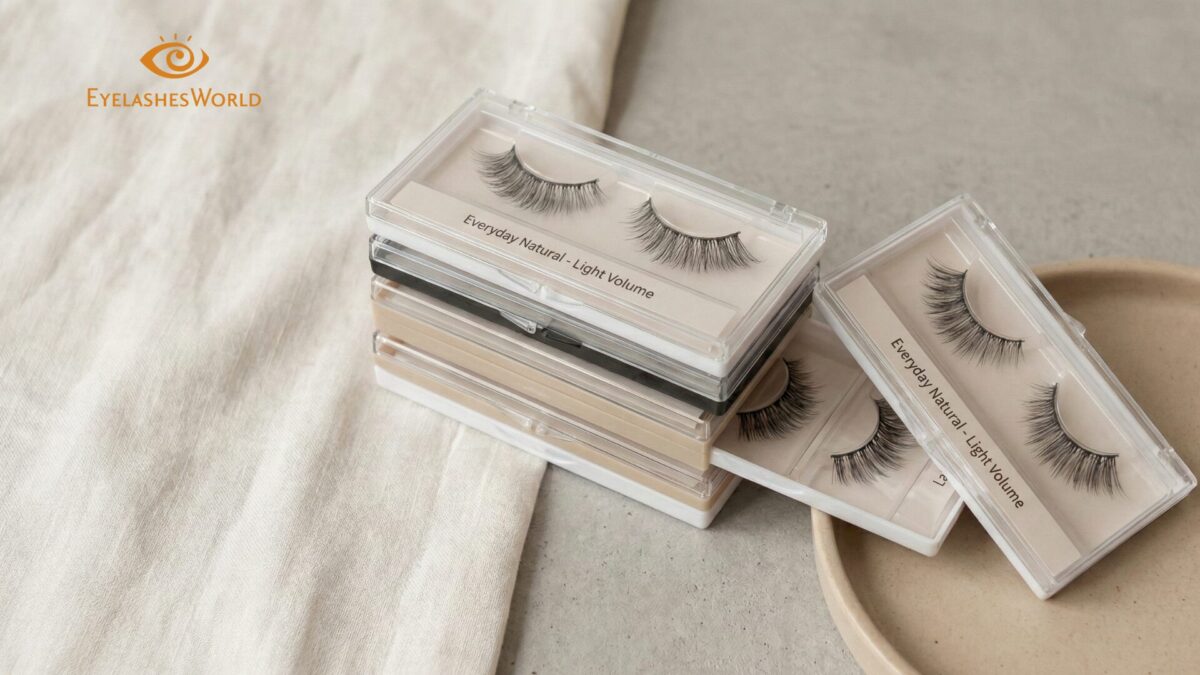
In the beauty industry especially in lash categories, assortment decisions are often explained through trends. Natural vs. volume. Wispy vs. bold. Minimal vs. dramatic.
But in real buying environments, trends are rarely the deciding factor. For buyers and category managers, assortment decisions are ultimately about risk management – not trend participation.
Why Trend-Led Assortments Often Underperform
Trend coverage helps explain why a style is launched. It does not explain how that style will perform once it reaches the shelf, especially in markets where realism-driven buying behavior increasingly prioritizes comfort, repeat wear, and everyday usability over visual impact alone.
In practice, assortments built primarily around trends often face:
Overlapping SKUs with similar usage
Slower sell-through across the range
Unclear signals for reordering decisions
A trend-aligned assortment may look complete at launch, but completeness does not guarantee performance.
The Real Risks Buyers Manage
Once products are live, buyers shift focus quickly.
The questions change from “Is this relevant?” to “Is this sustainable?”
Key risks buyers evaluate include:
Inventory exposure from slow-moving styles
Shelf efficiency across limited space
Diluted performance data when too many SKUs compete
Reorder uncertainty caused by unclear bestsellers
These risks accumulate quietly and directly impact replenishment confidence.
Why Bigger Assortments Feel Safer – but Aren’t
Expanding an assortment often feels like a defensive move.
More styles appear to reduce dependence on any single SKU.
In reality, wider assortments frequently:
Reduce velocity per style
Blur performance benchmarks
Increase hesitation at both shelf and buyer level
What feels like diversification can become fragmentation.
How Strong Assortments Manage Risk
High-performing assortments are rarely trend-heavy.
They are structure-led.
Successful ranges typically:
Limit SKU overlap
Define a clear role for each style
Prioritize repeatability over novelty
Make reorder decisions easy to justify
Trends are incorporated selectively within a framework designed to control risk, not amplify it.
Reorders Reveal the Truth
Launch performance shows interest. Reorder performance shows viability.
In the long term, assortment strength is not measured by how current it looks but by how consistently it moves.
Because in lashes, as in most beauty categories, assortment decisions aren’t about trends.
They’re about managing risk – clearly, predictably, and sustainably.