
EYELASHESWORLD.COM
From Lash Style to Lash Mapping
PT.Bintang Mas Triyasa
From Lash Style to Lash Mapping
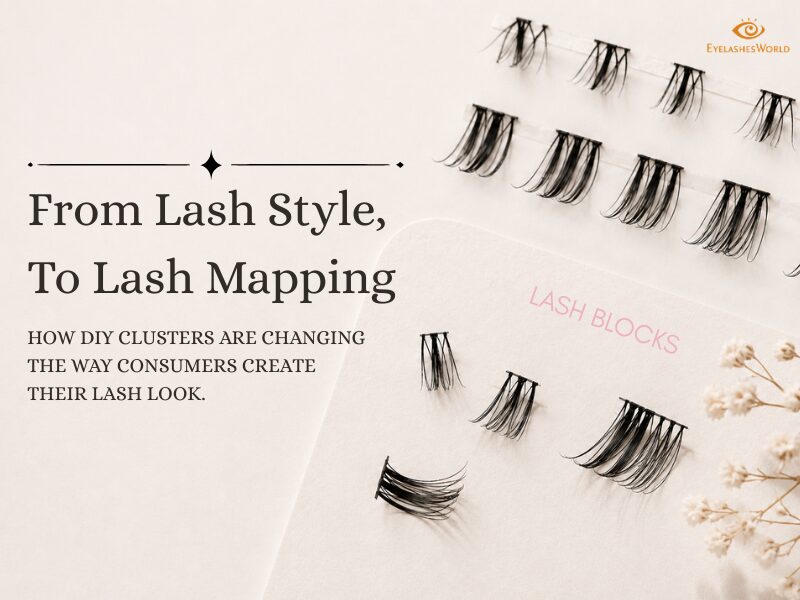
How DIY Clusters Are Changing the Way Consumers Create Their Lash Look
For years, buying false eyelashes meant choosing a finished look.
Natural. Wispy. Dramatic. Cat-eye. Voluminous.
The style was already designed. The consumer simply chose the one that came closest to the result they wanted.
DIY cluster lashes are introducing a different way to think about the category.
Instead of selecting one finished lash style, consumers can decide how they want to build their look.
Where should the lash be longer?
Where should it be fuller?
How much definition is enough?
Which areas should remain subtle?
These decisions are part of lash mapping—and they are giving consumers more control over the final result.
From Choosing to Creating
A traditional strip lash comes with a predetermined shape.
Its length, density, curl, and overall pattern have already been decided.
DIY clusters break that fixed structure into smaller components.
Different lengths and shapes can be placed individually along the lash line, allowing consumers to create their preferred arrangement.
The shift may sound simple, but it changes the role of the consumer.
Instead of asking:
“Which lash style should I buy?”
the question becomes:
“How do I want to build my lash look?”
That is a different kind of product experience.
What Is Lash Mapping?
Lash mapping is essentially the process of deciding where different lash lengths or styles should be placed across the eye.
For example, a consumer might use:
- Shorter clusters toward the inner corner
- Medium lengths across the center
- Longer clusters toward the outer corner
This can create a more elongated appearance.
Another consumer may keep the outer corner shorter and add more volume toward the center for a different effect.
The possibilities depend on the combination of clusters and how they are arranged.
This means the same tray can support different outcomes without requiring a completely different lash product.
Why DIY Clusters Fit Personalization
Personalization does not necessarily mean creating a completely unique product for every consumer.
Sometimes, it means giving consumers enough flexibility to adapt the product themselves.
DIY clusters offer that flexibility through several variables:
Length
Different lengths allow consumers to control how noticeable the lash looks.
Placement
Where clusters are positioned can change the overall shape and emphasis of the eye.
Density
Using fewer clusters can create a lighter finish, while adding more can increase fullness.
Combination
Different cluster styles can be mixed to create a more customized result.
Intensity
Consumers can decide how much enhancement they want instead of committing to one predetermined level of drama.
The product provides the components.
The consumer determines the arrangement.
One Product Can Support Different Preferences
This is where lash mapping becomes particularly relevant for product development.
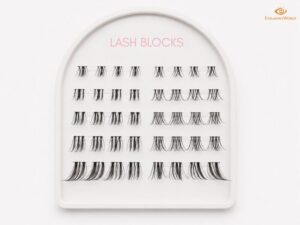
Consider two consumers using the same tray.
One may prefer a subtle everyday look and use only a few shorter clusters.
Another may want a more lifted and defined effect and combine different lengths across the lash line.
A third may want more volume for an evening look and increase the number of clusters used.
None of them necessarily needs a different product.
They are using the same product differently.
This gives brands another way to think about versatility.
Versatility does not always come from offering more products. Sometimes it comes from giving consumers more control over one product.
Making Personalization Easy
More control only creates value if consumers can actually use it.
This makes application experience an important part of personalized lash products.
If consumers are expected to create their own mapping, they need to understand how the different components work together.
This is where product design and communication become important.
Packaging can show:
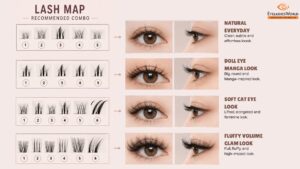
Visual instructions can make the idea of customization feel much more approachable.
Instead of telling consumers that a product is “customizable,” brands can show them what customization looks like.
What This Means for Beauty Brands
The rise of DIY clusters creates opportunities beyond the product itself.
Product Development
Brands can consider whether one flexible product can serve several consumer preferences instead of developing a separate SKU for every finished look.
Packaging
Packaging can become a guide.
Rather than displaying only one finished result, brands can demonstrate different mappings that consumers can recreate.
Content
Lash mapping creates natural opportunities for educational content:
- Three ways to map one tray
- How to create a lifted lash look
- A beginner’s guide to lash mapping
- Short vs. long cluster placement
- How to adjust lash intensity
This type of content does more than promote a product.
It helps consumers understand its possibilities.
Assortment
Personalized products can also give brands another way to build their assortment.
Instead of continuously adding more finished lash styles, brands can explore products that give consumers more control within a single format.
That does not make traditional strip lashes less relevant.
It simply adds another option for consumers who want to participate in creating the final result.
The Product Is No Longer the Final Look
This may be the biggest change.
Traditional lashes are often sold through the finished result:
“This is the look you will get.”
Personalized lashes can be sold through possibility:
“This is what you can create.”
That difference changes both the product story and the consumer experience.
The brand provides the building blocks.
The consumer provides the final decision.
And that makes personalization more than a product feature.
It becomes part of the experience.
The Opportunity for Lash Brands
For beauty brands exploring DIY clusters, the opportunity is not simply to follow another lash trend.
It is to consider whether consumers want more control over how their products work for them.
A personalized lash product can support different occasions, preferences, and levels of experience without requiring a completely different product for each outcome.
The key is to make that flexibility understandable.
Show the possibilities.
Explain the mapping.
Make the application approachable.
Then let consumers decide where they want to take the look.
Final Thoughts
False eyelashes have traditionally been about choosing a style.
DIY clusters introduce another possibility: choosing how to build one.
As consumers become more comfortable customizing their beauty routines, lash mapping gives them another layer of control over length, placement, density, and intensity.
The future of lash products may not simply be about creating more styles.
It may be about creating products that allow consumers to create more of their own.
From choosing a lash style to mapping a lash look.
That is where personalization begins.