
EYELASHESWORLD.COM
The New Rules of Beauty Product Discovery: How Consumers Find Beauty Products Today
PT.Bintang Mas Triyasa
The New Rules of Beauty Product Discovery: How Consumers Find Beauty Products Today
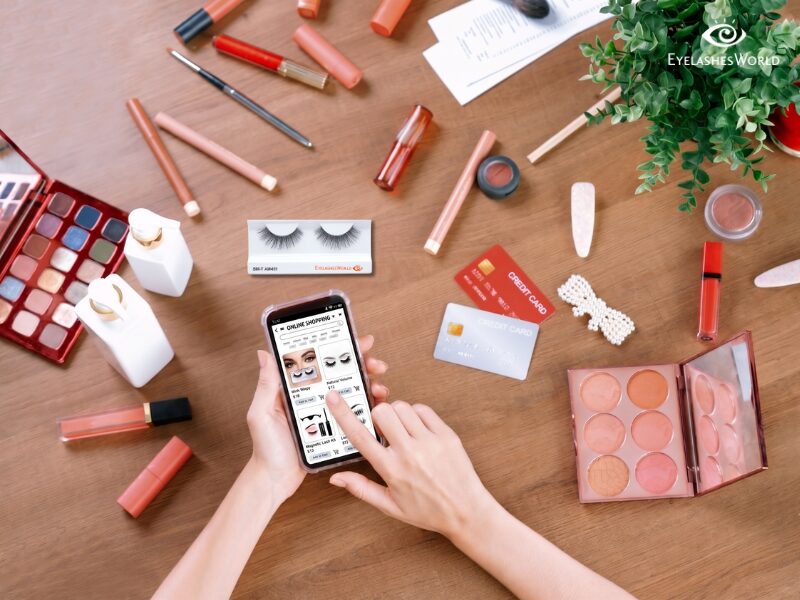
For years, beauty product discovery followed a fairly predictable path.
A consumer might search Google for the best mascara, read a few reviews, visit a brand’s website, and make a purchase.
Today, that journey looks very different.
A customer may first spot a makeup look on TikTok, save it on Pinterest, browse Reddit for honest opinions, ask ChatGPT which lash style suits hooded eyes, and only then visit a brand’s website.
The purchase still happens but the path leading to it has fundamentally changed.
According to Reddit’s Beauty Report, 81% of beauty shoppers visit Reddit after first discovering a product on TikTok, highlighting an important shift: discovery and validation no longer happen in the same place.
For beauty brands, this changes one fundamental question.
It is no longer:
“How do customers find our products?”
Instead, it becomes:
“Will customers find us wherever they begin their journey?”
Beauty Discovery Is No Longer Linear
Consumers no longer move through a simple purchase funnel. Instead, they navigate an ecosystem where different platforms play different roles.
Social platforms such as TikTok, Instagram, and Pinterest create inspiration.
Communities like Reddit build confidence through authentic discussions and product experiences.
Brand websites, blogs, and YouTube answer practical questions that help consumers make informed decisions.
Increasingly, AI assistants such as ChatGPT are helping shoppers compare products, explain differences, and summarize information before they ever visit a product page.
Each platform serves a different purpose.
One inspires.
One validates.
One educates.
One helps consumers decide.
The brands that understand this ecosystem are far more likely to remain part of the conversation throughout the buying journey.
Visibility Alone Doesn’t Build Confidence
Many beauty brands still measure success through visibility.
Higher rankings.
More impressions.
More followers.
These metrics remain important, but they no longer tell the whole story.
A viral TikTok video may generate millions of views, but consumers still need answers before making a purchase.
Will the lashes suit my eye shape?
Are they comfortable enough for all-day wear?
How do they compare with similar styles?
Research from Think with Google has consistently shown that consumers now move across multiple digital touchpoints before making a purchase decision, comparing information from different sources rather than relying on a single channel.
This is where educational content becomes a competitive advantage.
Buying guides, tutorials, FAQs, comparison articles, and transparent product information help reduce uncertainty. They transform curiosity into confidence.
In today’s beauty industry, content is no longer just marketing.
It has become part of the customer experience.
Mind the Discovery Gap
Perhaps the biggest challenge for beauty brands isn’t a lack of visibility.
It’s what we call the Discovery Gap—the difference between where consumers are looking and where brands are showing up.
Imagine a consumer discovers a new lash trend on TikTok.
She checks Reddit for honest feedback.
She asks ChatGPT to compare different lash styles.
Finally, she visits your website.
If your brand only appears at the final step, you’ve missed most of the conversation.
Closing the Discovery Gap doesn’t require being everywhere.
It requires understanding where your customers naturally seek inspiration, reassurance, and information—and ensuring your brand contributes something genuinely useful at each stage.
What This Means for Beauty Brands
The brands succeeding today aren’t necessarily the ones spending the most on advertising.
They’re the ones making it easier for consumers to discover, understand, and trust their products.
That means investing in more than social media.
It means creating educational blog content that answers real questions.
Publishing comparison guides that simplify buying decisions.
Encouraging authentic customer reviews.
Working with creators who demonstrate products in real-life situations.
And ensuring product information is structured clearly enough to be understood by both people and AI-powered search tools.
Consumers no longer discover products in one place.
Brands shouldn’t build their marketing strategy around one place either.
Business Perspective
Beauty product discovery has evolved from a search problem into a trust problem.
Consumers don’t buy the first product they see.
They buy the product that continues to appear with useful, credible information throughout their decision-making journey.
The next generation of beauty brands won’t compete solely for attention.
They’ll compete for discoverability.
Because in today’s market, being visible is only the beginning.
The brands that win are the ones consumers can discover, understand, and trust—wherever the journey begins.